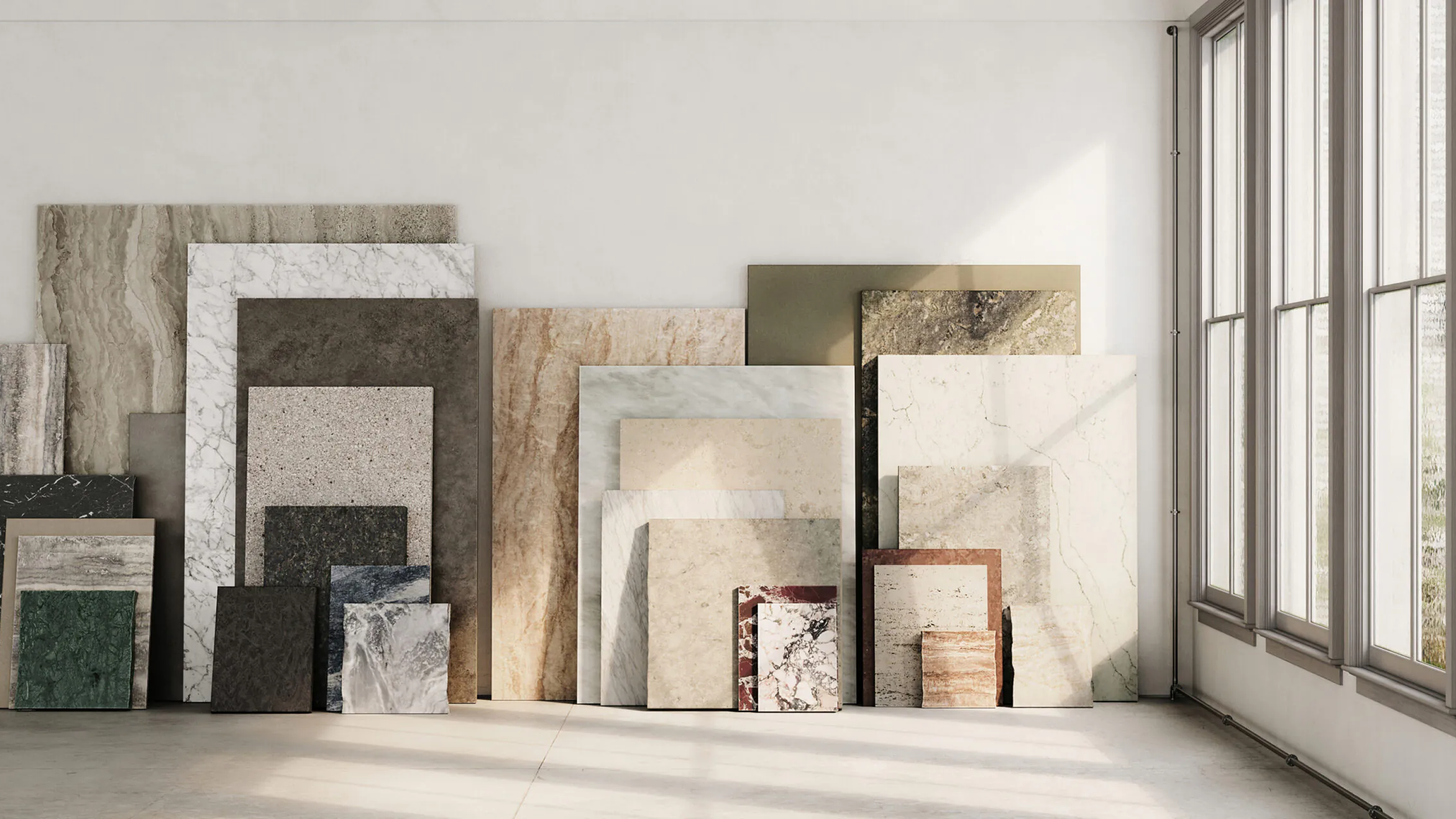
Engineered stone: Understanding the material everyone keeps asking about
If you’re here, it’s probably because you went through our journal on natural stone and still feel a little uncertain.
Totally normal. Many people do.
You love the look. You love the idea. But maybe you’re not sure how it will fit into the rhythm of your home.
So what alternatives are there?
A great question.
When it comes to alternatives to natural stone, there are options, and StoneLab does work with two of them: quartz composite and ceramic. These fall under what is known as engineered stone.
So what is engineered stone?
Simply put, it is a material created by humans with the intention to look like real stone, feel like real stone, but respond in ways that natural stone sometimes doesn’t. It is designed for consistency, for steadiness, for the kind of everyday life where you don’t want to think too much about your surfaces.
For many, this makes it a comforting choice.
Maybe you have had natural stone before and found it demanding.
Maybe you have young kids.
Maybe you simply want the peace of mind that comes from not worrying.
Engineered stone can offer that.
There are two main types of engineered stone that people usually explore: quartz composite and ceramic. Each one behaves differently, and each one has its own purpose and way of living in a space.
Quartz Composite
Quartz composite, often called quartz, has become a familiar name for many people.
Made from about 90 percent crushed quartz crystals blended with resins, pigments, and polymers that hold it all together.
The quartz gives strength.
The resins give consistency.
Because of this mix, quartz composite is generally resistant to staining and scratching. It stays stable through most daily use and rarely reacts. That predictability is the reason many choose it.
Brand slike Technistone, Caesarstone, and Silestone offer large collections in 20 mm and 30 mm, with polished, matte, and textured finishes. Prices typically range between 2000 and 5000 SEK per square meter, depending on the series.
Heat is the one thing to be mindful of.
The resins do not enjoy temperatures above roughly 150 degrees. Too much heat can lead to discoloration or, in rare cases, cracking.
Quartz composite also doesn’t handle sudden temperature changes well, so just avoid placing something very hot and something very cold directly on the surface at the same time. Think of your entrecôte and your ice cream as needing a little space and time from each other.
Quartz composite will not develop patina like natural stone. It remains itself. Over the years it may soften slightly in tone or finish due to the plastics it contains, but overall it stays stable and predictable.
Ceramic
Ceramic, also known as porcelain slabs or sintered stone, is made from clay, sand, and minerals pressed together and then baked at extremely high temperatures. This process creates a strong, dense material that handles both heat and scratching very well.
It usually comes in a 12 mm slab, giving it a clean and minimal silhouette, because of this we’ve seen ceramic find its way into a an increasingly growing number of modern Scandinavian homes.
The top surface carries the design, while the edges stay plain unless we build a mitered front to add visual weight. Because of this, ceramic works beautifully for bathrooms, cladding, floors, and kitchens where you want a clean and streamlined expression.
Ceramic often has a slightly more dramatic look than quartz composite, with deeper tones or more pronounced veining. It can also be used outdoors, staying steady through changing weather.
Interms of price, ceramic is generally higher than quartz composite, and in many cases higher than natural stone. It is a reliable, low-maintenance material that performs well in many environments.
We work with ceramic from trusted producers such as Dekton, Bricmate, Marazzi, Nuovo Corso, and Atlas Plan. All available in a range of tones and expressions to suit different projects.
Choosing Between Natural and Engineered
There is no right answer. Only the right material for your project, and for your life.
Available upon request, for specific projects.